How it works
Simple, fast, and effective cargo protection
Cargopak solutions are designed to prevent cargo movement during transport, reducing impacts, damage, and costs associated with damaged goods.
The process is simple and fast—no complex training or heavy equipment required.
-
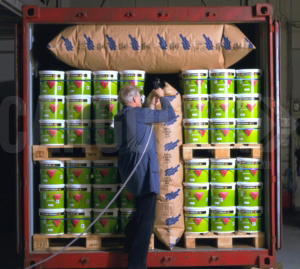
Cargo positioning
Once the goods have been correctly placed inside the container, truck, ship, or train, the empty spaces between the loads are identified.
These spaces are the main cause of:
- Cargo shifting
- Impacts during braking or cornering
- Damage during transport
This is where protective airbags come in.
-
Placement of protective airbags
Dunnage airbags are placed between the goods, filling empty spaces and creating a blocking and stabilizing effect.
✔ They adapt to different sizes and types of cargo
✔ They can be used in various modes of transport
✔ They do not damage the goods or packaging
✔ The low weight of the airbags makes them easy to handle
-
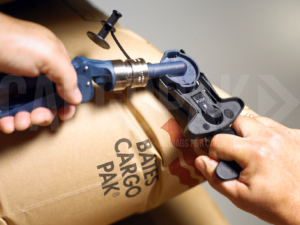
Fast and safe inflation
The airbags are inflated in just a few seconds using:
- Inflator with compressed air systems
- Portable inflator
The valves on the dunnage bags rotate 360º, allowing inflation even at difficult angles, which makes them ideal for small and narrow spaces. Our valve system, together with our inflation equipment, ensures that our airbags have the fastest inflation times on the market.
The pressure applied is controlled, ensuring:
- Load stability
- Uniform force distribution


-
Secure cargo throughout transport
After inflation, the cargo is immobilized and protected, even in situations involving:
- Sudden braking
- Sharp turns
- Prolonged vibrations
The result is safer transport, with less damage, fewer complaints, and greater peace of mind.
-
Easy removal at destination
At destination, the airbags are:
- Quickly deflated
- Reusable (depending on model)
No waste, no hassle, and no wasted time.
Why does this system work?
✔ Prevents cargo shifting
✔ Reduces impacts and vibrations
✔ Increases transport safety
✔ Lowers costs related to damage and returns
✔ Complies with standards and good logistics practices
It is an efficient, economical, and proven solution.